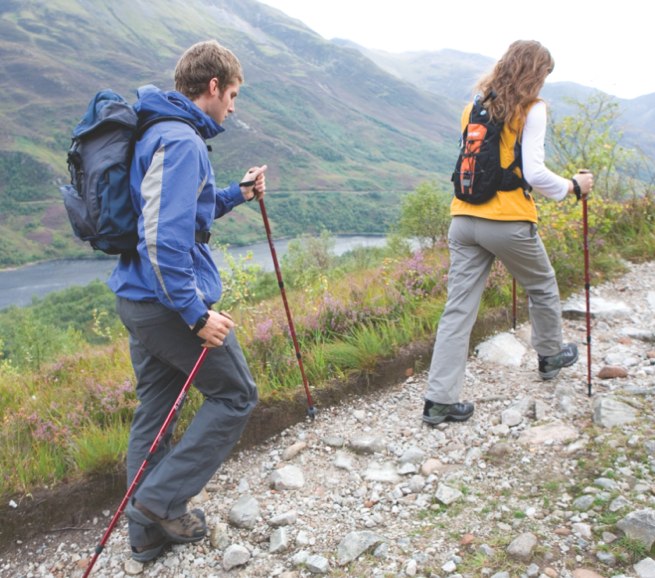
People are increasingly demanding more from their holidays and package holidays on the beach no longer cut the mustard. More and more people are opting for rambler's holidays as the pursuit of hiking and rambling grows more popular by the day. Obviously, rambler's holidays aren't something that you will book on a whim and you will want to ensure you have the right hiking equipment, such as boots and navigational tools, before booking any sort of rambling excursion.
Rambler's holidays can be booked in the UK in places like the Lake District, Snowdonia and various other locations and there are also so many great places throughout the world to enjoy hiking holidays. France, Switzerland, USA and South America all have must see destinations for ramblers and hikers alike but it is obviously crucial to have the right hiking equipment for the sort of terrains that you will be pitting your wits against.
Have you got the Right Hiking Boots for a Rambler’s Holiday?
It is important to realise that many rambler's holidays aren't for the feint-hearted and you will need to make sure you pack a good level of fitness and the right hiking equipment in your suitcase before you set off. Hiking footwear is the most important piece of the puzzle to get right because how enjoyable your rambling will be is largely dictated by how comfortable you are - and hiking boots are the main catalyst to achieving comfort.
A hiking holiday won't be the right choice for everyone but if you have a sense of adventure and enjoy the great outdoors then it might just be the perfect fit for you. Hiking trails will vary dramatically in just how difficult and remote they are and you shouldn't try to bite off more than you can chew if you are new to the world of rambling or hiking. Once you have the right hiking apparatus, you can build up your experience by going on rambler's holidays each year.
Rambler's holidays can be found all over the globe and once you've tackled one, chances are there won't be a hiking trail out there that you won't want to tackle. Regardless of what sort of rambling terrains you are going up against, it is important to respect the environment and ensure that you are properly prepared with all the right hiking boots, kit and apparatus. Hi-Tec hiking boots are firmly established as one of the most sought after and durable forms of footwear on the market today.
Friday, 18 February 2011
Friday, 11 February 2011
Children's Hiking Boots - The Kids are Alright
Hiking is a pursuit to be enjoyed by people of all ages but children are beginning to take part in this invigorating activity in ever increasing numbers - and it is crucial that you find the right children's hiking boots for them. Comfort is paramount when hiking trails of any kind - be they mountain, woodland or countryside - and hiking boots are the most important piece of equipment when it comes to ensuring a comfortable walk.
Children's hiking boots are an important consideration for families that are heading on European or UK hiking trips and you should check with your children to see which style or hiking footwear they would prefer - because, safe to say, there are plenty of different styles to choose from. Hiking equipment really does make the trip because, without the right equipment, it won't be as enjoyable, so carefully choosing children's hiking boots will make sure they are happy from the moment the sun rises until you set up camp for the night.
What to Look for in Children's Hiking Boots
There are many different features that will be important when it comes to choosing children's hiking boots. For the children themselves, the way that the footwear actually looks is likely to be the most important thing but for parents, and their practical way of thinking, comfort has to take priority over visual appeal.
Fortunately, however, it is possible to find children's hiking boots that have both style and comfort in abundance and the technology behind both children's and adult hiking footwear is improving all of the time. Needless to say, you will want to make sure that you have all the necessary hiking gear for a trip in the UK or overseas and a great place to find all of your hiking equipment is online.
If you're looking for an affordable pair of children's hiking boots, it is a good idea to consider leading brands like Hi-Tec because you know that you'll be getting the very best in quality and design for a price that doesn't break the bank.
Children's hiking boots are an important consideration for families that are heading on European or UK hiking trips and you should check with your children to see which style or hiking footwear they would prefer - because, safe to say, there are plenty of different styles to choose from. Hiking equipment really does make the trip because, without the right equipment, it won't be as enjoyable, so carefully choosing children's hiking boots will make sure they are happy from the moment the sun rises until you set up camp for the night.
What to Look for in Children's Hiking Boots
There are many different features that will be important when it comes to choosing children's hiking boots. For the children themselves, the way that the footwear actually looks is likely to be the most important thing but for parents, and their practical way of thinking, comfort has to take priority over visual appeal.
Fortunately, however, it is possible to find children's hiking boots that have both style and comfort in abundance and the technology behind both children's and adult hiking footwear is improving all of the time. Needless to say, you will want to make sure that you have all the necessary hiking gear for a trip in the UK or overseas and a great place to find all of your hiking equipment is online.
If you're looking for an affordable pair of children's hiking boots, it is a good idea to consider leading brands like Hi-Tec because you know that you'll be getting the very best in quality and design for a price that doesn't break the bank.
Friday, 4 February 2011
What sort of Hiking Trail is Right for you?
Obviously, people will have different ideas as to what type of hiking trail they wish to tackle but, as luck would have it, there are plenty of different hiking terrains to be negotiated all over the world. People fall in love with hiking from the first time they try it but it is imperative to have all the right hiking equipment if you are to really make the most of this immensely enjoyable pastime.
There are many different ways to enjoy hiking trails but many people like to turn a good hike into a camping trip and will stay for a few nights under the stars. When searching for the right equipment for tackling a hiking trail, it is a good idea to head online because this is where you will be able to find all the stuff you need - from hiking boots to camping equipment.
Gentle Stroll or Epic Slog - A Breakdown of the Hiking Trail
Choosing the hiking trail that you are going to tackle will be the first and one of the most enjoyable elements of planning a hiking holiday. Whether you are looking to tackle hiking trails in the UK like those in Wales and the Highlands or want to go a bit further afield in Europe or USA, you should look to ensure that you have the very best hiking equipment - such as footwear, GPS, maps and other essentials.
The intensity of hiking trails can vary dramatically so it really is wise to do a little research beforehand to make sure that you’re not tackling an Everest style ascent when you were after a gentle stroll! A hiking trail can take many different forms and you could be tackling woodland terrain one minute and rocky paths the next - so it is very important to have footwear that fits the bill in terms of durability and comfort.
Once you have picked the hiking trail, you can plan when you're going to tackle it and the sort of hiking gear that will be suitable for the trip. There are all sorts of hiking boots available to choose from and Hi-Tec are unquestionably one of the leading names in supplier the sort of hiking footwear that makes for a comfortable and enjoyable hike.
There are many different ways to enjoy hiking trails but many people like to turn a good hike into a camping trip and will stay for a few nights under the stars. When searching for the right equipment for tackling a hiking trail, it is a good idea to head online because this is where you will be able to find all the stuff you need - from hiking boots to camping equipment.
Gentle Stroll or Epic Slog - A Breakdown of the Hiking Trail
Choosing the hiking trail that you are going to tackle will be the first and one of the most enjoyable elements of planning a hiking holiday. Whether you are looking to tackle hiking trails in the UK like those in Wales and the Highlands or want to go a bit further afield in Europe or USA, you should look to ensure that you have the very best hiking equipment - such as footwear, GPS, maps and other essentials.
The intensity of hiking trails can vary dramatically so it really is wise to do a little research beforehand to make sure that you’re not tackling an Everest style ascent when you were after a gentle stroll! A hiking trail can take many different forms and you could be tackling woodland terrain one minute and rocky paths the next - so it is very important to have footwear that fits the bill in terms of durability and comfort.
Once you have picked the hiking trail, you can plan when you're going to tackle it and the sort of hiking gear that will be suitable for the trip. There are all sorts of hiking boots available to choose from and Hi-Tec are unquestionably one of the leading names in supplier the sort of hiking footwear that makes for a comfortable and enjoyable hike.
Friday, 28 January 2011
Why do my legs and feet hurt after walking?
You know the feeling; you've just finished ten miles walking across gruelling but breathtaking countryside and you're feeling rather pleased with yourself after having conquered that seemingly never-ending summit and finally having arrived safely back at your base-camp. Perhaps you may be sat with a sandwich and a well earned glass of beer in front of a traditional country pub's log fire, exchanging stories with locals and fellow walkers. And then, once the adrenalin wears off and you get your breath back, you begin to ask yourself the question: why do my legs and feet hurt after walking.
The initial euphoria of your hiking success dissipates as you begin to feel the inevitable aches and tightening sensations on your leg muscles. They begin to realise that you're no longer giving them the strenuous work-out you had been doing and start to contract quickly.
As the muscles relax and contract, often the build up of lactic acid that is formed when heavy exercise is undertaken, can lead to cramps, especially in those whose muscles become fatigued more quickly.
Feet can also hurt after walking because of several factors including cramp. However, one of the most common ways that feet hurt after walking is down to the dreaded blister - the walker's curse. Blisters form where there is additional friction on the skin which has been caused by repeated motion and sometimes exacerbated by ill-fitting socks and walking shoes. Blisters are actually nature's way of protecting the area that has been damaged, by providing a last ditch attempt at providing a 'pillow' of fluid beneath the skin to protect the body underneath it. However, they can be very painful if, after they've formed the person needs to continue walking and worst of all if the blister bursts.
When a blister bursts (this can be because the blister's owner has deliberately burst it or because continuous wear from further walking friction has caused it) the protective bubble disappears, and whilst blisters can be uncomfortable by making walking or wearing footwear more difficult, bursting them is many times more painful and can lead to the area becoming infected.
So, the question 'why do my legs and feet hurt after walking' could be due to these two most common reasons. However, with a little rest and some proper warming-down exercises, cramp can be avoided to some extent and if they do appear, they can pass relatively quickly. Rest and a good hot shower will often be all a walker needs to help warm up the muscles, prevent cramps and give those blisters a break by taking the weight of their legs.
The initial euphoria of your hiking success dissipates as you begin to feel the inevitable aches and tightening sensations on your leg muscles. They begin to realise that you're no longer giving them the strenuous work-out you had been doing and start to contract quickly.
As the muscles relax and contract, often the build up of lactic acid that is formed when heavy exercise is undertaken, can lead to cramps, especially in those whose muscles become fatigued more quickly.
Feet can also hurt after walking because of several factors including cramp. However, one of the most common ways that feet hurt after walking is down to the dreaded blister - the walker's curse. Blisters form where there is additional friction on the skin which has been caused by repeated motion and sometimes exacerbated by ill-fitting socks and walking shoes. Blisters are actually nature's way of protecting the area that has been damaged, by providing a last ditch attempt at providing a 'pillow' of fluid beneath the skin to protect the body underneath it. However, they can be very painful if, after they've formed the person needs to continue walking and worst of all if the blister bursts.
When a blister bursts (this can be because the blister's owner has deliberately burst it or because continuous wear from further walking friction has caused it) the protective bubble disappears, and whilst blisters can be uncomfortable by making walking or wearing footwear more difficult, bursting them is many times more painful and can lead to the area becoming infected.
So, the question 'why do my legs and feet hurt after walking' could be due to these two most common reasons. However, with a little rest and some proper warming-down exercises, cramp can be avoided to some extent and if they do appear, they can pass relatively quickly. Rest and a good hot shower will often be all a walker needs to help warm up the muscles, prevent cramps and give those blisters a break by taking the weight of their legs.
Tuesday, 18 January 2011
Hiking Food - What Should You Take On Your Trip?
Before setting off on your hiking adventure, it is important that you prepare yourself for the journey ahead. That means wearing the right clothes and taking the right food. Your choice of hiking food can greatly affect your stamina and overall enjoyment of the hiking trip, so the key is to plan (and purchase) your food well in advance.
So what sort of hiking food should you take? The main thing to bear in mind is that hiking consumes calories, so you need food that will replenish your body with the calories you need to then burn them off during the trip. A common mistake is for people to think that 'junk foods' constitute as high calorie foods that are perfect for a hiking trip. Wrong! What you actually need are foods that will give you energy, not make you feel lethargic after eating them.
The best tip we can give you is to make sure you eat a healthy breakfast before setting off on your hiking trip. Porridge and rich oaty foods are ideal, and steer clear of the ever-so-tempting full English breakfast that will just laden your body up with unnecessary fats and disrupt your body's healthy start to the day. Choose foods that will release energy gradually throughout the day.
A lot of people choose fruit to take on their hiking trip. It is actually advisable to eat fruit as one of the first things in the morning, as it takes much longer to digest than other foods and should effectively be the first thing you eat so it has time to digest properly. Of course, taking bananas with you on a hiking trip is always a good idea as they give the body energy.
For longer trips, you need a different type of hiking food. This is where carbohydrates play an important part in your diet and you will need to be packing a bag full of things like pasta and meats, as the protein is also an essential.
Getting the right clothing and footwear is one thing, but your choice of hiking food is crucial if you are planning a hiking trip.
So what sort of hiking food should you take? The main thing to bear in mind is that hiking consumes calories, so you need food that will replenish your body with the calories you need to then burn them off during the trip. A common mistake is for people to think that 'junk foods' constitute as high calorie foods that are perfect for a hiking trip. Wrong! What you actually need are foods that will give you energy, not make you feel lethargic after eating them.
The best tip we can give you is to make sure you eat a healthy breakfast before setting off on your hiking trip. Porridge and rich oaty foods are ideal, and steer clear of the ever-so-tempting full English breakfast that will just laden your body up with unnecessary fats and disrupt your body's healthy start to the day. Choose foods that will release energy gradually throughout the day.
A lot of people choose fruit to take on their hiking trip. It is actually advisable to eat fruit as one of the first things in the morning, as it takes much longer to digest than other foods and should effectively be the first thing you eat so it has time to digest properly. Of course, taking bananas with you on a hiking trip is always a good idea as they give the body energy.
For longer trips, you need a different type of hiking food. This is where carbohydrates play an important part in your diet and you will need to be packing a bag full of things like pasta and meats, as the protein is also an essential.
Getting the right clothing and footwear is one thing, but your choice of hiking food is crucial if you are planning a hiking trip.
Tuesday, 11 January 2011
Trail Running - Special Shoes for a Special Sport
Trail running is becoming a big mainstream outdoors activity which is attracting many new followers and participants who are keen to embrace the outdoors and get fit at the same time. And, unlike some other sports and outdoor activities, there is little financial outlay for those who want to get started when compared with other outdoor pursuits such as mountain biking. Except for a special pair of trail running shoes, there really is little else to buy.
Much of the equipment required for outdoor trail running can be assembled from the collection of items that most outdoor lovers will have in their possession already. These will include such things as special water-bottles or water-pouches that can be carried like a rucksack and connected with a straw. Other items include insect repellent, sunglasses and sun-block.
Of course, if you were doing this on foot, many would recommend taking along the 'ten essentials' for those exploring trails that are off the beaten track. However, a little common sense clearly goes a long way here. Without the necessary map and compass for example in high mountainous regions of the Scottish highlands, a trail runner could easily find themselves lost- but no-one is suggesting that trail running should be attempted in deep fog with poor weather conditions. In fact, trail running is just that - running a trail which by its very nature is usually well worn and well known.
Trail running shoes however are an essential item that all trail runners should use. They are constructed with a sole that is lower to the ground than ordinary running shoes to enable better balance over more uneven terrain. The soles are also fitted with special grips, to ensure maximum friction with the ground. Unlike road running shoes, trail running shoes are used over ground that is generally softer than roads, pavements or other hardcore running surfaces. This softer ground more than compensates for the 'lower to ground' design of a quality trail running shoe.
Trail running is an exhilarating activity that can increase fitness levels whilst offering the chance to enjoy the beauty of the countryside away from the beaten track.
Much of the equipment required for outdoor trail running can be assembled from the collection of items that most outdoor lovers will have in their possession already. These will include such things as special water-bottles or water-pouches that can be carried like a rucksack and connected with a straw. Other items include insect repellent, sunglasses and sun-block.
Of course, if you were doing this on foot, many would recommend taking along the 'ten essentials' for those exploring trails that are off the beaten track. However, a little common sense clearly goes a long way here. Without the necessary map and compass for example in high mountainous regions of the Scottish highlands, a trail runner could easily find themselves lost- but no-one is suggesting that trail running should be attempted in deep fog with poor weather conditions. In fact, trail running is just that - running a trail which by its very nature is usually well worn and well known.
Trail running shoes however are an essential item that all trail runners should use. They are constructed with a sole that is lower to the ground than ordinary running shoes to enable better balance over more uneven terrain. The soles are also fitted with special grips, to ensure maximum friction with the ground. Unlike road running shoes, trail running shoes are used over ground that is generally softer than roads, pavements or other hardcore running surfaces. This softer ground more than compensates for the 'lower to ground' design of a quality trail running shoe.
Trail running is an exhilarating activity that can increase fitness levels whilst offering the chance to enjoy the beauty of the countryside away from the beaten track.
We have some very exciting news regarding our new breed of Trail Running Shoes, V-Lite Infinity, so keep an eye on our website and social networks next week for an update!
Sunday, 26 December 2010
How and Where to Walk Off Your Christmas Dinner Calories
According to the latest studies, the average Brit will eat and drink food totalling more than 4,000 calories this Christmas Day, with at least 1,000 of them coming from the traditional turkey dinner. So, there's more incentive than ever to get out into the great British countryside for a walk with loved ones after your festive dinner. However, if the scary calorie consumption statistics aren't enough to get you moving, then the beautiful Great British countryside at its wintry best ought to do the trick.
With that in mind, we've been kind enough to list the calorific content of your Christmas dinner below. But, fear not! We've also shared with you some of the most breathtaking walks around the UK so you can walk off the tasty treats. So, see you out and about sometime after the Queen's speech?
The average Christmas dinner...
1 x portion of roast turkey = 149 calories
1 x portion of roast potatoes = 127 calories
1 x portion of stuffing = 231 calories
1 x portion of roast parsnips = 102 calories
1 x portion of boiled carrots = 14 calories
1 x portion of boiled sprouts = 32 calories
1 x serving of gravy = 17 calories
1 x serving of cranberry sauce = 45 calories
1 x serving of bread sauce = 42 calories
2 x pigs in blankets = 394 calories
1 x slice of Christmas cake = 249 calories
1 x portion of cheese and biscuits = 394 calories
1 x portion of Christmas pudding, custard and brandy butter = 587 calories
= a whopping 2383 calories!
So, get your walking boots on and get out and about on Christmas day. Here are our festive favourites around the UK.
Northern Ireland’s best...
Castle Ward, Strangford Lough
Overlooking the south shores of Strangford Lough, Castle Ward is one of Northern Ireland's finest demesnes or country estates. At its heart lies an unusual Georgian mansion, but there is a lot more to discover here... This walk explores the waterside, a ruined castle, woodland, an ornamental lake and follies. Visit in winter for a chance to see a fantastic range of migrating birds and the resident seals.
The walk is 2.5 miles long, and walked at average speed (about 2mph), could see you burn about 300 calories - you may want to go round the estate twice, or walk more briskly to really make a dent in your Christmas calories!
Wales' best...
Rhossili Bay, South Wales
Take in the tremendous coastal views from Rhossili Down before descending to Rhossili Bay, considered one of the finest sandy beaches in the UK. At the southern end of the bay, when the tide is low, a finger of limestone rock leads to Worms Head where seabirds and seals can be seen- a real Christmas treat!
The walk is 5 miles long and will burn about 500 calories when walked at an average pace - although walking barefoot on the sand (if the snow's cleared!) or up a hill or two will burn plenty more.
The best of the North...
Alderley Edge, Cheshire
This beautiful woodland walk begins at Alderley Edge railway station and is just 12 miles south of Manchester. Set around a dramatic sandstone escarpment in rolling Cheshire farmland and mature Scots pines and beech woodlands, the Edge has spectacular views, intriguing legends and an ancient history of copper mining which dates back 4,000 years to the Bronze Age!
The walk is 4.5 miles long so you're likely to burn just under 500 calories; the equivalent of two slices of Christmas cake.
The best of the South...
Staple Plain, Somerset
Wander down through broadleaf woodland, into a bracken filled combe and up to the top of Beacon Hill to savour fantastic panoramic views across the Quantock Hills and beyond. Continue through lowland heathland, listening and looking out for red deer, skylark and Dartford warbler in this wildlife-rich environment.
The walk is 2 miles long so you'll burn about 200 calories. If you want to work harder, take the dog- he or she will encourage you to get moving!
The Midlands’ best...
Calke Park and Abbey, Derby
As well as a grand Baroque mansion with a large natural history collection, Calke has secret walled gardens and 600 acres of parkland, much of which is a National Nature Reserve. The park is a rich and varied landscape of grassland, ponds and wood pasture - one of the rarest habitats in Europe. You'll also find majestic veteran trees and some great 'bug' - watching sites. There are no public roads at Calke so it is perfect for a peaceful walk.
The walk is 1.5 miles long so you’ll probably burn about 200 calories. However, the sights are so pretty that you may well end up strolling round more than once and, given that there are no public roads, you could add to the distance by walking to Calke to start with.
With that in mind, we've been kind enough to list the calorific content of your Christmas dinner below. But, fear not! We've also shared with you some of the most breathtaking walks around the UK so you can walk off the tasty treats. So, see you out and about sometime after the Queen's speech?
The average Christmas dinner...
1 x portion of roast turkey = 149 calories
1 x portion of roast potatoes = 127 calories
1 x portion of stuffing = 231 calories
1 x portion of roast parsnips = 102 calories
1 x portion of boiled carrots = 14 calories
1 x portion of boiled sprouts = 32 calories
1 x serving of gravy = 17 calories
1 x serving of cranberry sauce = 45 calories
1 x serving of bread sauce = 42 calories
2 x pigs in blankets = 394 calories
1 x slice of Christmas cake = 249 calories
1 x portion of cheese and biscuits = 394 calories
1 x portion of Christmas pudding, custard and brandy butter = 587 calories
= a whopping 2383 calories!
So, get your walking boots on and get out and about on Christmas day. Here are our festive favourites around the UK.
Northern Ireland’s best...
Castle Ward, Strangford Lough
Overlooking the south shores of Strangford Lough, Castle Ward is one of Northern Ireland's finest demesnes or country estates. At its heart lies an unusual Georgian mansion, but there is a lot more to discover here... This walk explores the waterside, a ruined castle, woodland, an ornamental lake and follies. Visit in winter for a chance to see a fantastic range of migrating birds and the resident seals.
The walk is 2.5 miles long, and walked at average speed (about 2mph), could see you burn about 300 calories - you may want to go round the estate twice, or walk more briskly to really make a dent in your Christmas calories!
Wales' best...
Rhossili Bay, South Wales
Take in the tremendous coastal views from Rhossili Down before descending to Rhossili Bay, considered one of the finest sandy beaches in the UK. At the southern end of the bay, when the tide is low, a finger of limestone rock leads to Worms Head where seabirds and seals can be seen- a real Christmas treat!
The walk is 5 miles long and will burn about 500 calories when walked at an average pace - although walking barefoot on the sand (if the snow's cleared!) or up a hill or two will burn plenty more.
The best of the North...
Alderley Edge, Cheshire
This beautiful woodland walk begins at Alderley Edge railway station and is just 12 miles south of Manchester. Set around a dramatic sandstone escarpment in rolling Cheshire farmland and mature Scots pines and beech woodlands, the Edge has spectacular views, intriguing legends and an ancient history of copper mining which dates back 4,000 years to the Bronze Age!
The walk is 4.5 miles long so you're likely to burn just under 500 calories; the equivalent of two slices of Christmas cake.
The best of the South...
Staple Plain, Somerset
Wander down through broadleaf woodland, into a bracken filled combe and up to the top of Beacon Hill to savour fantastic panoramic views across the Quantock Hills and beyond. Continue through lowland heathland, listening and looking out for red deer, skylark and Dartford warbler in this wildlife-rich environment.
The walk is 2 miles long so you'll burn about 200 calories. If you want to work harder, take the dog- he or she will encourage you to get moving!
The Midlands’ best...
Calke Park and Abbey, Derby
As well as a grand Baroque mansion with a large natural history collection, Calke has secret walled gardens and 600 acres of parkland, much of which is a National Nature Reserve. The park is a rich and varied landscape of grassland, ponds and wood pasture - one of the rarest habitats in Europe. You'll also find majestic veteran trees and some great 'bug' - watching sites. There are no public roads at Calke so it is perfect for a peaceful walk.
The walk is 1.5 miles long so you’ll probably burn about 200 calories. However, the sights are so pretty that you may well end up strolling round more than once and, given that there are no public roads, you could add to the distance by walking to Calke to start with.
Friday, 17 December 2010
Walking On Ice Safely
In the UK, the closest many of us ever get to ice occurs on a Saturday night on TV. However, watching celebrities dancing on ice doesn't really prepare you for walking on ice safely during a cold winter outdoors.
It has to be said that we're not all that prepared in the UK for snow and ice, but let's face it, we've had so few severe winters that have led to prolonged severe conditions in recent times, that it’s easy to become complacent. When the snow and ice does come, many of us are simply unable to put the weather into the context of our everyday lives - which is understandable - and therefore, even the simplest of things become quite hard, such as walking to the local shop.
Walking on ice safely and knowing how to do it important, so here are a few tips to note down for the next time you'll need to walk on ice.
It has to be said that we're not all that prepared in the UK for snow and ice, but let's face it, we've had so few severe winters that have led to prolonged severe conditions in recent times, that it’s easy to become complacent. When the snow and ice does come, many of us are simply unable to put the weather into the context of our everyday lives - which is understandable - and therefore, even the simplest of things become quite hard, such as walking to the local shop.
Walking on ice safely and knowing how to do it important, so here are a few tips to note down for the next time you'll need to walk on ice.
- First things first - make sure you have good, strong winter snow boots, with sturdy rubber soles. An old trick is to increase the grip of your soles using an old pair of socks - the added friction can help with traction on ice.
- Check the weather forecasts regularly during cold weather. If there's been any sort of moisture from snow or rain followed by freezing temperatures (especially overnight), it's highly likely that ice will have formed in some places, either on roads or on pavements.
- Remember, pavements tend not to receive quite the same priority when it comes to laying gritting salt, and therefore, icy patches can be found more readily.
- Be especially careful again when walking near drains, drainage channels and guttering - these all carry water, and where there's water, the risk of ice forming greatly increases.
- Be aware of dark, wet looking patches on tarmac - these could quite easily be black ice which is especially dangerous because it catches so many people unawares, often giving the appearance of a puddle of water.
- Walk slowly, with your feet slightly pointing outwards - bend your knees slightly when walking, so that your centre of gravity is directly over your feet. Doing these three things will help you maintain balance and give you a better chance of walking on ice safely.
- Never walk on ice with your hands in your pockets. If you do slip and fall, you’ll need your hands to help break your fall. If you hands are susceptible to the cold, then make sure you wear a good thick insulated pair of gloves instead. Gloves will also prevent unnecessary grazing.
- Finally, always wear a good thick coat - not only will this keep you warm, it could help cushion any falls you might have as a result of slipping on ice.
Wednesday, 8 December 2010
Walking in the Rain and the Snow - Things We Do For Love
Whilst 10cc may not be everyone's cup of tea when it comes to music, and indeed, that statement's only applicable if you can remember them, walking is certainly something that people do for love. And at this time of year, when rain, snow and icy winds can get the better of us, it's time to take some precautions to ensure that they don't.
There are a few vital things that walkers should do to ensure that they remain safe during the winter months and most of them are pure common sense, inexpensive and easy.
Perhaps one of the first things that walkers should do before encountering any significant hiking trip that involves walking in the rain and the snow is to tell someone your route, when you intend to tackle that route and a list of estimated times for arriving at certain checkpoints. That's not to say that you need to stick rigidly to everyone, or provide a step-by-step account of where you'll be at say, 3.37pm exactly. But, it does give some indication of where you should be and if your absence should be of cause for concern.
Clearly, the people you tell may know you and your abilities, and they can factor this into assessing any absence as serious. Factoring in the weather conditions and other knowledge of the area in which you intend to walk could give a more complete picture to the people you tell so that they can decide if there are any potentially serious problems.
It is also important to make sure when walking in the rain and the snow that you have the correct equipment, clothing and supplies. Without waterproofs, spare warm clothing, food (including emergency high energy foods and sweets), a compass, torch and map - you wouldn't even satisfy the basics that are recommended to almost all walkers attempting a significant hike.
And, if you're walking in the rain and the snow - the basics may not even be enough. No-one should be scared of attempting to walk in less than favourable weather, but without the correct equipment, the simplest of walks could turn into a nightmare. Most examples of walkers getting into trouble stem from them being unprepared and underestimating the conditions and the terrain. When walking in the rain and the snow, don't let yourself become part of the statistics. Further in depth practical walking information can be found on the Ramblers Association website.
Friday, 26 November 2010
Hiking News: Going Hiking Every Few Weeks Isn't Enough!
Although many of us have hectic schedules and find it hard to find the time to fit a rigorous hike into our diaries, it seems we should all be making more effort to go hiking according to a top German Professor from the Sport Medicine Institute at Germany's University of Munster. He has recently claimed that hiking "every few weeks just isn't enough". His recommendation? "At least two walks a week lasting between 30 and 45 minutes each are needed to show an improvement in health".
So, what's the best way to do this then? We all know we should exercise for 30 minutes every day, which many simply do not have the time to do, so it is intriguing to hear research stating that we should actually be hiking twice a week. For those that have 9-5 jobs it just isn't going to be that simple, but it certainly gives us something to think about. Perhaps if we were all honest with ourselves, we probably don't exercise as much as we should and it's about time we made more of an effort. Of course, time is always of the essence and it makes it difficult for busy people to try and fit hiking into a hectic schedule.
A recent study by Germany's Hiking Association revealed that almost half of people over 16 in Germany went trekking but it was only the over 60s that did this several times each month. Perhaps even more interesting would be a study on the UK or US, to see if our trekking populations could match that. Many would probably doubt it.
When it comes down to it, if you love the outdoors and you like exercising, there is certainly no reason why you can't make the time to go hiking and keep active. If you start when you are younger then it will also reduce health risks later on in life. Perhaps there are some people that still view hiking as something only the older generations do, but if we can all get into the mind and spirit of hiking for enjoyment as well as fitness, then perhaps more young people would embrace the activity.
If you're an active hiker, we think you deserve a pat on the back. If not, well, simply read this article about the health benefits of hiking to see exactly how important it is: http://www.mamashealth.com/hike
Friday, 19 November 2010
How to Choose Hiking Gifts for Friends
There are thousands of hiking fans all over the world and finding hiking gifts that they will enjoy is something that should be born in mind around Christmas or birthdays. Obviously, hiking boots are the main piece of kit that any keen hiker will have a need for but there are various other hiking gifts that may well tick all of the right boxes as well.
Most pieces of hiking equipment are fairly inexpensive and will last for a considerable amount of time so it is easy to find hiking gifts to match any price range. It's not just hiking boots that will put a smile on a keen hiker's face - various other gifts are likely to be just as well received.
Great Hiking Gift Ideas
There are many considerations that can be taken into account when it comes to purchasing hiking gifts and most won't cost you and arm and a leg. Hiking equipment comes in many different forms but it often pays to think outside of the box when it comes to picking hiking gifts. Just some ideas to think about include:
Hiking Magazine Subscription - Getting a subscription to a hiking magazine won't cost massive amounts of money and is a great idea for a hiking gift. For anyone who enjoys this pursuit, getting monthly literature about the activity will be extremely rewarding so a hiking magazine subscription is definitely a gift that keeps on giving.
Hiking Apparatus - There is essentially no-end to the amount of hiking equipment which hits the market and heading online will fill you in with the sorts of products which are likely to make good hiking gifts. Things like roll out tables are bits of hiking kit that are incredibly useful but are the type of thing people forget they need - which makes them an ideal hiking gift idea.
Hiking boots, such as the Altitude NT WP Enviro, are ideal for all your light hiking trails and trips and will also make the perfect hiking gift for those who are wanting to push the boat out a little.
Most pieces of hiking equipment are fairly inexpensive and will last for a considerable amount of time so it is easy to find hiking gifts to match any price range. It's not just hiking boots that will put a smile on a keen hiker's face - various other gifts are likely to be just as well received.
Great Hiking Gift Ideas
There are many considerations that can be taken into account when it comes to purchasing hiking gifts and most won't cost you and arm and a leg. Hiking equipment comes in many different forms but it often pays to think outside of the box when it comes to picking hiking gifts. Just some ideas to think about include:
Hiking Magazine Subscription - Getting a subscription to a hiking magazine won't cost massive amounts of money and is a great idea for a hiking gift. For anyone who enjoys this pursuit, getting monthly literature about the activity will be extremely rewarding so a hiking magazine subscription is definitely a gift that keeps on giving.
Hiking Apparatus - There is essentially no-end to the amount of hiking equipment which hits the market and heading online will fill you in with the sorts of products which are likely to make good hiking gifts. Things like roll out tables are bits of hiking kit that are incredibly useful but are the type of thing people forget they need - which makes them an ideal hiking gift idea.
Hiking boots, such as the Altitude NT WP Enviro, are ideal for all your light hiking trails and trips and will also make the perfect hiking gift for those who are wanting to push the boat out a little.
Wednesday, 10 November 2010
Going on Hiking Trips with Man's Best Friend
Hiking trips are enjoyed by thousands of walkers each year across the UK and more and more are deciding to get their four legged friends in on the action - and bringing their dogs along. It is important to make sure that the hiking trail that you choose is suitable for dogs and that you have all the hiking equipment that you require before you set off.
Dogs absolutely love being in the wilderness alongside their masters so it makes perfect sense to take them on hiking trips with you. There are so many sights, sounds and smells that can be enjoyed by you and your hairy companion but making sure that you've got all the hiking boots, clothing and equipment that you'll need in the boot of your car is a must - whether you are just going on a day hike or are planning a few days in the wilderness.
Getting your Dog Ready for a Hike
Whilst some dogs will take to hiking like a duck to water, excuse the inaccurate animal analogy, it is important that you properly prepare your pet for hiking if it's something that they are not used to. Needless to say, if your dog is of a lazy disposition, you shouldn't endeavour to take him on an extensive hiking trip straight away - dogs are like humans and will need physical conditioning in preparation for hiking trips.
So, start off by taking your four legged friend on a few smaller hikes before working your way up to the more difficult terrains that you want to tackle together. Generally speaking, if you plan on taking your dog on repeated hiking trips and trails, it is probably a good idea to discuss their health with your vet just to make sure that they will be up to facing the rigours associated with hiking activities and trips.
Bringing your dog with you on a hiking adventure will really add to the enjoyment considerably because dogs are in their element in the wilderness and their sense of adventure is likely to open new doors that you may not have otherwise witnessed during your hiking trip.
Of course, dogs won't require any specific hiking equipment but it is imperative that you kit yourself out with a good pair of hiking boots - if only to be able to keep up with your pet pooch! Many hikers swear by the quality of the Hi-Tec Rainer Event hiking boots.
Dogs absolutely love being in the wilderness alongside their masters so it makes perfect sense to take them on hiking trips with you. There are so many sights, sounds and smells that can be enjoyed by you and your hairy companion but making sure that you've got all the hiking boots, clothing and equipment that you'll need in the boot of your car is a must - whether you are just going on a day hike or are planning a few days in the wilderness.
Getting your Dog Ready for a Hike
Whilst some dogs will take to hiking like a duck to water, excuse the inaccurate animal analogy, it is important that you properly prepare your pet for hiking if it's something that they are not used to. Needless to say, if your dog is of a lazy disposition, you shouldn't endeavour to take him on an extensive hiking trip straight away - dogs are like humans and will need physical conditioning in preparation for hiking trips.
So, start off by taking your four legged friend on a few smaller hikes before working your way up to the more difficult terrains that you want to tackle together. Generally speaking, if you plan on taking your dog on repeated hiking trips and trails, it is probably a good idea to discuss their health with your vet just to make sure that they will be up to facing the rigours associated with hiking activities and trips.
Bringing your dog with you on a hiking adventure will really add to the enjoyment considerably because dogs are in their element in the wilderness and their sense of adventure is likely to open new doors that you may not have otherwise witnessed during your hiking trip.
Of course, dogs won't require any specific hiking equipment but it is imperative that you kit yourself out with a good pair of hiking boots - if only to be able to keep up with your pet pooch! Many hikers swear by the quality of the Hi-Tec Rainer Event hiking boots.
Thursday, 21 October 2010
How Many People Choose Music For Walking?
It has long been recognised that playing music during exercise can help concentration and focus the mind on the job in hand. Ever since the Sony Walkman was unleashed on the world in 1979, changing our music listening habits forever, music has become an essential part of individual pursuits such as running, jogging and cycling. What person hasn't seen a jogger with a piece of wire attached to each ear, with an MP3 device clipped on the back of their shorts?
Now walkers and hikers can also take up the habit, and benefit from music for walking. So, here we recommend some artists and composers for three different styles of walking:
Countryside Ambles
Vaughan Williams, John Denver, Erik Satie, Dire Straits and Cliff Richard: All of these artists and composers have a range of gentle and soft music ideal for the Sunday afternoon countryside amble.
Stiff Hilly Hikes
Queen, Gustav Holst, Iron Maiden and The Prodigy: If you're going up a mountain or need to cover a few more miles quickly, then this selection will suit you fine - hard and sometimes very fast.
Athletic Power Walking
Kraftwerk, Wagner, Beethoven and Paul Oakenfold: Get yourself into a trance with the big German composers or some experimental electronic sounds.
On a serious note, it's a proven fact that whilst music in itself doesn't necessarily improve a person's health and fitness, listening to music whilst exercising can help improve the ability to keep to regular fitness routines, be it through music for walking, hiking, running or cycling. Music helps improve concentration levels during physical activity and as a result it can have a dramatic effect indirectly on a person's health.
If you're going walking after reading this, try equipping yourself with some basic equipment; a small MP3 player with a clip and some earphones that won't fall out during your physical exertions. All you then need to do now is choose some music for walking from the artists above - and your away.
Happy Hiking!
Now walkers and hikers can also take up the habit, and benefit from music for walking. So, here we recommend some artists and composers for three different styles of walking:
Countryside Ambles
Vaughan Williams, John Denver, Erik Satie, Dire Straits and Cliff Richard: All of these artists and composers have a range of gentle and soft music ideal for the Sunday afternoon countryside amble.
Stiff Hilly Hikes
Queen, Gustav Holst, Iron Maiden and The Prodigy: If you're going up a mountain or need to cover a few more miles quickly, then this selection will suit you fine - hard and sometimes very fast.
Athletic Power Walking
Kraftwerk, Wagner, Beethoven and Paul Oakenfold: Get yourself into a trance with the big German composers or some experimental electronic sounds.
On a serious note, it's a proven fact that whilst music in itself doesn't necessarily improve a person's health and fitness, listening to music whilst exercising can help improve the ability to keep to regular fitness routines, be it through music for walking, hiking, running or cycling. Music helps improve concentration levels during physical activity and as a result it can have a dramatic effect indirectly on a person's health.
If you're going walking after reading this, try equipping yourself with some basic equipment; a small MP3 player with a clip and some earphones that won't fall out during your physical exertions. All you then need to do now is choose some music for walking from the artists above - and your away.
Happy Hiking!
Thursday, 9 September 2010
The Ramblers - Still Wearing Hiking Boots at 75
Over 75 years ago, if you fancied a walk in an area of natural beauty like the Peak District one sunny afternoon for example, it wasn't the case that you could simply pop your boots on, pack your vittles and saunter off into the dales.
Thanks to the Ramblers Association, formed 75 years ago in 1935, hikers no longer need fear the wrath of the gamekeeper's gun or the lock and key of the local gaoler, which was the case back in those inter-war years. The Ramblers Association or Rambler's as they are now known, has been at the forefront of public accessibility arguments, helping to ensure the UK's 140,000 miles of footpaths and bridleways remain open for the walkers, hikers and families. They are one of the largest charitable organisations in Britain.
To celebrate their organisations continued success and achievements, the Rambler's are holding a succession of Baton Walks, which by the end of 2010 will have crossed the whole of Britain. In August, the baton is being passed by walkers around the East Midlands, and then for the last 4 months through the East of England, London and concluding in the South East. If you're interested, get your hiking boots on and join in!
The Ramblers (http://www.ramblers75.org.uk/) won't rest on their laurels though. They're already campaigning to try and encourage more families to take up walking and put on their hiking boots - sharing information on the benefits of the activity, as well as continuing to campaign for hikers' rights. They're also keen to encourage walking health benefits. One way in which they aim to achieve this is through their extremely popular Get Walking, Keep Walking campaign which highlights the importance to body and mind of natural exercise - not only in places of outstanding natural beauty like the National Parks, but also in inner-city areas like Birmingham, London and Sheffield.
You can also apply for a Get Walking Pack which (although temporarily suspended due to demand) will be available online very soon to help you plan your walking activities and get the most benefit from it, which, together with choosing the right equipment and hiking boots, will give you everything you need to get started.
Thanks to the Ramblers Association, formed 75 years ago in 1935, hikers no longer need fear the wrath of the gamekeeper's gun or the lock and key of the local gaoler, which was the case back in those inter-war years. The Ramblers Association or Rambler's as they are now known, has been at the forefront of public accessibility arguments, helping to ensure the UK's 140,000 miles of footpaths and bridleways remain open for the walkers, hikers and families. They are one of the largest charitable organisations in Britain.
To celebrate their organisations continued success and achievements, the Rambler's are holding a succession of Baton Walks, which by the end of 2010 will have crossed the whole of Britain. In August, the baton is being passed by walkers around the East Midlands, and then for the last 4 months through the East of England, London and concluding in the South East. If you're interested, get your hiking boots on and join in!
The Ramblers (http://www.ramblers75.org.uk/) won't rest on their laurels though. They're already campaigning to try and encourage more families to take up walking and put on their hiking boots - sharing information on the benefits of the activity, as well as continuing to campaign for hikers' rights. They're also keen to encourage walking health benefits. One way in which they aim to achieve this is through their extremely popular Get Walking, Keep Walking campaign which highlights the importance to body and mind of natural exercise - not only in places of outstanding natural beauty like the National Parks, but also in inner-city areas like Birmingham, London and Sheffield.
You can also apply for a Get Walking Pack which (although temporarily suspended due to demand) will be available online very soon to help you plan your walking activities and get the most benefit from it, which, together with choosing the right equipment and hiking boots, will give you everything you need to get started.
Hikers Tackling Britain’s National Park Walks
Some of the most interesting and yet challenging hiking is provided by the UK's National Park walks. Many of these are well-known, such as the Pennine Way or the Viking Way, and can be longer than 250 miles.Further information about National Park walks can be found at theNational Park's Website http://www.nationalparks.gov.uk/visiting/outdooractivities/walking. Here there is plenty of useful information about the many different National Park walks available such as 214 of Alfred Wainwright's walks in the Lake District or the Coast to Coast which runs from St Bees in Cumbria and ends in the North York Moors town of Robin Hood's Bay.
For those attempting National Park walks of such magnitude as the Pennine Way in one go, then it should be noted that this task is suitable only for those who have walking experience, are fit and healthy and (it almost goes without saying) that they are able to carry a backpack comfortably.
Importantly the choice of equipment for such an expedition should take into account several things such as making sure that it's waterproof, windproof and perhaps even foolproof (depending on the hiker of course)! Things such as tents, sleeping bags, cooking equipment and food all need to be carried, as well as the essential survival kits, first aid and water supplies (the latter being especially important during the summer months).
Hiking along one of the National Park walks is a valuable experience for those wishing to achieve something truly special, but the challenges that these impressive and protected parts of the UK countryside can throw at even the most experienced backpacker, can be the utmost test of strength, ability and stamina.
Friday, 27 August 2010
Work Experience
I have just finished a week of work experience at Hi-Tec in the marketing department. I was given the opportunity to undertake various projects in which have not only tested my ability and taught me about what it takes to be the best, but also about sports I had little knowledge of.
Researching the competition relating to Outdoor Footwear in the UK allowed me to understand price points in comparison to Hi-Tec (which not only appeared to be the most reasonable, but varied) was intriguing and useful. However, I particularly enjoyed researching the relatively new phenomenon, Trail Running, which is becoming increasingly popular and mainstream.
Trail Running differs immensely from road or track running, since it occurs on hiking trails and diverse terrain. Mud, gravel, steep inclines and declines are expected on rough or soft surfaces in areas such as mountains, deserts and forests. Therefore, specialist equipment is compulsory in order to eradicate potential injuries which may ensue in these conditions, and to help ensure you have the best run possible reaching optimum speed with paramount stability.
Hi-Tec’s s/s 2011 collection for Trail Running, V-Lite Infinity, delivers on Function, Comfort, Lightweight, and Innovation, collaborating all the essential needs of a Trail Runner. Stability is key when running and V-Lite Infinity guarantees that the shape is more biomechanically functional and comfortable, with a more efficient gait cycle in order to help reduce pronation and injury. The ion-mask keeps your footwear dryer, lighter and cleaner along with providing breathability to ensure a comfortable run and longevity of the product.
Running on varied terrains means that it is essential for the sole to grip well and be durable, which is exactly what the Vibram Sole provides. They do not seem to clog up with mud therefore ensuring longevity, and the central rubber is a sticky Vibram for improved wet surface traction.
Along with the technical functions, V-Lite Infinity is aesthetically pleasing and shoes come in an assortment of colours. The comprehensive and extensive research I have compiled allows me to suggest that the V-Lite Infinity range contains the perfect Trail Running shoe, for all trail runners.
But, unfortunately you will have to wait until early next year to grab a pair for yourself! However, I can assure you that they will be well worth the wait.
Amy Foster-Taylor
Amy Foster-Taylor
Monday, 23 August 2010
Walking to Work for Body, Mind and the Environment
Everyone is being encouraged to do it. Walking to work is free, easy to get into and for most able-bodied people, not a particularly difficult challenge. So the question that needs asking is - why are so many people still so averse to doing it more regularly?
Clearly, accusations of laziness might be the first approach to those that can't take their hands of their steering wheel and the keys out of the ignition. However, fairness is always important in such arguments and many people may actually want to start walking to work but find that other reasons prevent walking to walk being their first choice.
For these 'driving pedestrians', walking to work is clearly not just a choice based on how far their homes are to their place of work. Feeling safe in areas that need to be walked through, street cleanliness and ironically, the ability to avoid traffic and cross roads easily all contribute to the decision on whether walking to work is a good idea. In big cities, noise and pollution is also a concern - ‘'driver pedestrians' can either create pollution whilst being protected from it in their air conditioned vehicles, or, prevent contributing to the pollution whilst having to breathe it in.
For those pedestrians wanting to get into walking to work, there is a support charity called Living Streets which campaigns for pedestrian rights, as well as encouraging people to walk to work through their campaign Walking Works. Living Streets gives advice for those walking to work on how to complain about excessive littering, poor pavements and areas where traffic and pedestrians compete for rights of way.
The Walking Works campaign is specifically targeted at office workers and held a very successful Walk to Work Week intended to highlight its benefits to health, body and mind and generate publicity. And of course, let's not forget the environmental impact of walking to walk - there isn't one. Walking to walk is healthy, green and sometimes, just sometimes, an enjoyable experience that more people should try.
Monday, 16 August 2010
Hiking Weather: What's Happened To The UK Summer?
As a brand that's passionate about hiking, each year we anticipate a warm and pleasant summer in the UK and quite often we are left feeling rather disappointed. The hiking weather reports sound optimistic for the months leading up to summer and we often start to feel positive that this summer could be good for the UK. However, with the 2010 summer nearing to a close already, we find ourselves questioning when we will actually have some decent hiking weather here in the UK.
The optimum hiking weather is not about beating hot sun scorching your skin; it's quite simply a pleasant, warm and dry day. Hiking in hot weather is not a good idea as people can become dehydrated and the heat means our bodies have to work harder to be able to climb that hill or mountain. All the UK really wants is a month or two of great sunny weather that's perfect for hikers, but it seems 2010 is a wash-out already.
June started off well - there were some glorious sunny days during this month and then by the time July and August came, we did wonder where the pleasant weather had gone. For hikers, good hiking weather is essential and unless the rest of August holds some sunshine surprises, it's looking like we are on track for another wet few weeks leading us into autumn.
We can't predict the weather and for hikers it's even harder. Hikers plan their expeditions a good few weeks in advance and it really comes down to just 'hoping' that there won't be any bad weather that they have to contend with. Kitting yourself out with the right clothing helps, but most people would agree that a few weeks of really good hiking weather is just what the UK needs this year. Still, we can't count on it and more hikers are feeling like they should abandon their hiking trips this year because of the poor weather we have had so far. Our advice is to stay positive and head on out in your ion-mask boots; then you'll be prepared for any sort of hiking weather!
Wednesday, 11 August 2010
Green Hikers Campaign - Advice for Himalayan Hikers
It's an increasingly carbon sensitive world out there and any methods that hikers can employ to help reduce their carbon footprint is helpful to the environment and also to hikers with a conscience.
The Green Hiking Campaign may seem like a strange concept, given that most hiking enthusiasts tend not to emit carbon dioxide in lorry-loads when practicing their favoured activity. But one question does need answering - how do hikers get to the areas in which they want to go hiking in the first place?
Some ultra dedicated green hiking professionals will of course walk there - in fact, there is no beginning or end for these people - hiking is a way of life and they'll walk everywhere. But not all hiking fanatics are quite so dedicated - and it's understandable why.
Travel, along with littering and general disrespect for the environment is one reason why the World Wildlife Fund (WWF) has launched its Green Hikers Campaign to help raise awareness about environmental issues in the Himalayan region. In association with the Indian Government's Tourism Ministry, the Green Hikers Campaign has been set up to ensure that dangerously fragile ecosystems in the Himalayas are protected by encouraging tour operators and their passengers to decrease their impact on the local environment.
With the slogan "nature leaves a mark on you, don't leave one behind", the campaign features a Green Hiker Animation Film which was released at the launch again reinforcing the aims of protecting the Himalayan environment.
To find out more or to follow the campaign, hikers can sign up for updates at the WWF Website, or read some of the comments that green hikers have already left about the benefits to the campaign. Whilst the Green Hiker Campaign is focussed on the Himalayas and tourism operating in India and the regions, many of the basic principles of green hiking can be translated to any hiker in any location across the world.
Friday, 6 August 2010
Hiking In The Lake District In Your Flipflops
A recent report published in the Westmorland Gazette has highlighted the bizarre and sometimes downright dangerous choices that some walkers hiking in the Lake District have been making when choosing which footwear to use. A spokesperson from The North West Air Ambulance reported incidents of inexperienced walkers wearing luxurious soft sheepskin lined leisure footwear, flipflops and other shoes deemed highly 'inappropriate' for these most challenging of fells.
This year, mountain rescue teams have already attended up to 38 incidents, 12% of the total, in which hikers were found to be wearing poor footwear.
The importance of choosing the correct boots for hiking in the Lake District is without doubt something that shouldn't be treated lightly. There is plenty of advice available for ensuring adequate protection for your feet, ankles, knee and leg muscles and there really is little excuse for being ill-prepared.
Some of the most common injuries seen by walkers hiking in the Lake District are also seen in other areas of the country, where bad footwear decisions have meant a lot of pain for the wearers, and sometimes for some considerable time after the initial problem began. Here are some of the most common problems walkers can face, even with the best hiking boots:
Straining the thigh and knee - This sort of injury can occur when hiking up or down hillsides where greater strain and pressure is placed on these areas. There are however hiking techniques which can be used to limit this sort of damage.
Painful, unexpected ankle sprains - This is perhaps one of the most common walking injuries, especially when hiking in the Lake District - tough climbs and scree slopes formed from loose fragmented rock can cause the ankle to roll outwards and cause the injury. Ankle sprains can be avoided by ensuring good quality hiking boots are worn with adequate ankle protection - it's fairly obvious that flipflops really won't prevent ankle sprains.
Dreaded blisters - All walkers will at some point get blisters. They occur for various reasons, most notably because of repeated pressure on an area of skin where moisture is unable to escape. The most preventable measure to avoid getting blisters is to ensure your hiking boots fit snugly and that appropriate socks are worn with them. Always carry First Aid items that can help with blisters, such as plasters and specialist blister creams.
Of course, hiking in the Lake District in flipflops is never going to do anybody any favours, and not only can this sort of behaviour put the wearers health and sometimes lives at risk, it also puts greater pressure on the mountain rescue services and air ambulance teams that are called out to hikers who've been caught out by bad and irresponsible decisions.
Always get advice about the best kind of hiking boots to wear, make sure you have a fitting session from an expert or specialist supplier and if you’re intending to go hiking in the Lake District, make sure you share this advice with anyone you see with a map of Helvellyn in one hand and a pair of flipflops in the other.
Subscribe to:
Posts (Atom)